

Defense Contractors Increasingly Seek Agile US RF Manufacturing
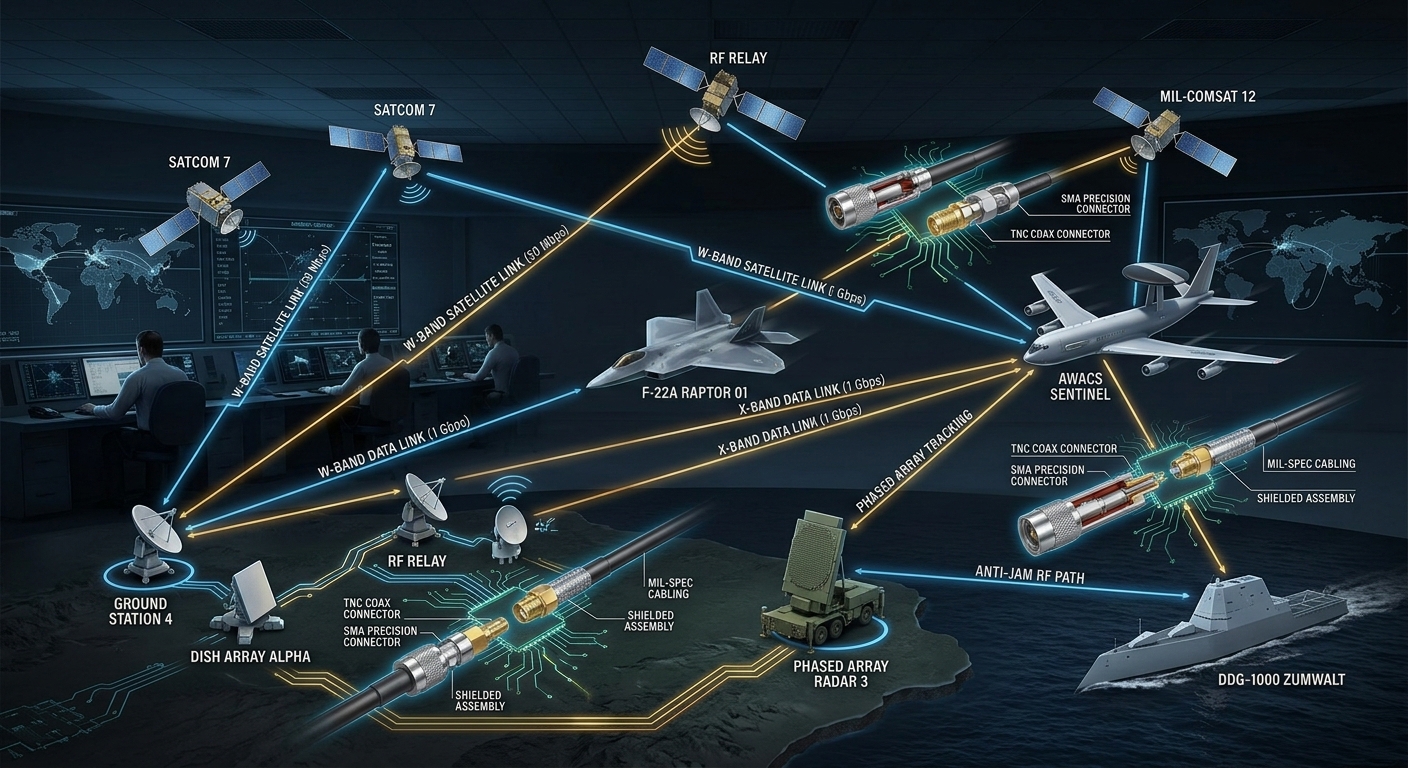
RF components by Coaxicom are advancing communications across the globe.
Following renewed White House calls for faster production, defense contractors are increasingly seeking agile U.S. manufacturing to support RF communications.
Engineering teams often need to move quickly. Working directly with manufacturing partners who understands both the engineering and production realities helps programs move forward much faster.”
STUART, FL, UNITED STATES, March 9, 2026 /EINPresswire.com/ -- STUART, FL — As defense and aerospace programs accelerate development cycles, engineering teams are increasingly looking for manufacturing partners capable of supporting faster RF component production and collaborative engineering support.— John Haas
Advanced radar systems, satellite communications platforms, electronic warfare technologies, and secure communications networks are evolving rapidly. Engineers and program managers are under pressure to accelerate development timelines while maintaining strict reliability and performance requirements. Yet one persistent challenge continues to slow many programs: the supply chain for specialized RF components.
Recent policy discussions in Washington have emphasized the need for faster defense production and more resilient domestic supply chains. As defense contractors respond to increasing pressure to accelerate development timelines, the ability to source critical electronic components from responsive U.S. manufacturing partners has become an important consideration for engineering and procurement teams.
The RF Component Bottleneck
RF connectors, adapters, cable assemblies, and precision microwave components are essential elements within modern electronic systems. These components enable signal transmission across radar platforms, communications networks, sensing systems, and satellite infrastructure.
When these components are delayed, development programs can stall.
In many cases, engineering teams encounter production lead times that stretch for months when sourcing specialized RF components through large catalog manufacturers. These timelines can complicate prototype development, delay testing cycles, and slow the transition from design to deployment.
As defense programs accelerate, organizations are increasingly exploring manufacturing partners capable of responding with greater flexibility.
Why Agile RF Manufacturing Matters
Agile manufacturing environments operate differently from traditional high-volume production models. Rather than relying exclusively on standardized catalog production cycles, agile manufacturers are structured to move between prototype development, small-batch manufacturing, and scalable production more efficiently. This flexibility allows engineering teams to move from concept to working hardware more quickly.
In RF systems development, responsiveness can significantly shorten iteration cycles. Engineers are able to test designs, evaluate signal performance, refine connector configurations, and adjust system architecture without extended procurement delays. For aerospace and defense programs operating under accelerated timelines, this collaborative approach can offer important advantages.
Engineering Collaboration as a Development Advantage
Another factor differentiating agile manufacturing partners is the ability for engineers to communicate directly with manufacturing specialists.
Many large suppliers operate through layered corporate structures and distribution channels. While these organizations maintain extensive product catalogs, engineers may have limited opportunities to collaborate directly with the production teams responsible for specialized components.
Collaborative manufacturing environments allow engineers to discuss material selection, connector geometry, machining tolerances, and production feasibility directly with experienced manufacturing professionals.
According to John Haas, Managing Director at Coaxial Components Corp., this level of collaboration can significantly improve development efficiency.
“Engineering teams often need to move quickly when they’re developing new RF systems,” Haas said. “Being able to work directly with a manufacturing partner who understands both the engineering requirements and the production realities helps programs move forward much faster.”
This collaboration becomes especially important when systems require specialized RF components, custom connector configurations, or prototype hardware not readily available through standard catalogs.
The Role of Domestic RF Manufacturing
Supply chain reliability has also become an increasing priority within the defense and aerospace sectors. Global supply chains have grown more complex in recent years, creating potential disruptions for programs requiring specialized electronic components. For organizations operating within regulated defense environments, sourcing components from trusted domestic manufacturers can also simplify compliance and procurement processes.
Manufacturing facilities located within the United States provide advantages including supply chain transparency, regulatory alignment, and direct communication between engineering teams and manufacturing personnel.
Coaxial Components Corp., operating under the Coaxicom brand, has manufactured RF connectors and microwave components in the United States since 1968. The company’s facility in Stuart, Florida produces RF connectors, adapters, attenuators, cable assemblies, and precision connector components for aerospace, defense, telecommunications, and advanced research applications. The company operates as an ITAR-compliant manufacturing facility, supporting the production of controlled components used in regulated defense and aerospace programs.
Supporting Next-Generation Defense Systems
Modern defense platforms increasingly depend on sophisticated RF and microwave technologies. Satellite communications systems, radar networks, electronic sensing platforms, and secure communications infrastructure all rely on precision components capable of maintaining signal integrity under demanding operating conditions.
At the same time, these technologies are evolving rapidly. Engineers developing next-generation systems often require prototype components, specialized materials, and custom configurations that cannot always be sourced through traditional product catalogs. Agile manufacturing partners can support early-stage engineering collaboration while also providing scalable production capabilities once designs are validated. As defense programs continue to accelerate, the demand for responsive RF manufacturing partners is expected to grow.
About Coaxial Components Corp. (Coaxicom)
Coaxial Components Corp., operating under the Coaxicom brand, is a U.S.-based manufacturer of RF connectors, adapters, attenuators, cable assemblies, and precision microwave components serving aerospace, defense, telecommunications, and advanced technology industries. Founded in 1968, the company operates a domestic manufacturing facility in Stuart, Florida, providing precision CNC machining, RF assembly, and testing capabilities. Coaxial Components Corp. maintains an ITAR-compliant manufacturing environment supporting the production of controlled components used within regulated defense and aerospace programs.
Organizations interested in discussing RF connector manufacturing, prototype component development, or specialized RF hardware can contact John Haas, Managing Director, or visit www.coaxicom.com for additional information.
John Haas
Coaxial Component Corp
+1 772-287-5000
email us here
Visit us on social media:
LinkedIn
Legal Disclaimer:
EIN Presswire provides this news content "as is" without warranty of any kind. We do not accept any responsibility or liability for the accuracy, content, images, videos, licenses, completeness, legality, or reliability of the information contained in this article. If you have any complaints or copyright issues related to this article, kindly contact the author above.
