

The Silent Powerhouse: Why SMS Remains Vital for Global Digital Security
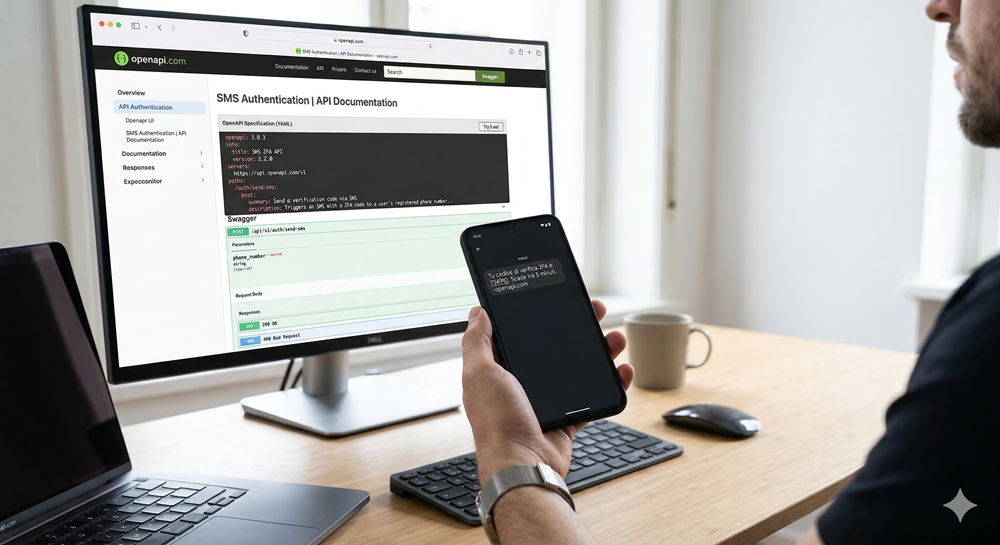
Openapi for sms service
From 2FA reliability to strict AGCOM regulations, discover why the humble SMS is still the gold standard for secure, high-stakes business communication.
The common mistake is thinking all SMS routes are the same, When a business sends a critical 2FA code, that message needs to travel through a 'Gold' route. ”
HIGH WYCOMBE, BUCKINGHAMSHIRE, UNITED KINGDOM, March 19, 2026 /EINPresswire.com/ -- The Resurgence of the 160-Character Message— Simone Desantis
In an era dominated by instant messaging giants like WhatsApp, Telegram, and Slack, one might assume that the Short Message Service (SMS) is a relic of the past.
However, beneath the surface of the modern web, SMS has evolved from a peer-to-peer texting tool into the most critical infrastructure for global security and automated notifications.
While OTT (Over-The-Top) apps require a data connection and a specific platform installation, SMS remains the only universal protocol available on every mobile device on Earth, regardless of hardware or internet access.
This universality is exactly why it has become the backbone of Two-Factor Authentication (2FA) and critical automated alerts.
The Mathematics of Trust: Why 2FA Matters
The move toward SMS-based verification isn't just a trend; it is a response to the escalating threats of the digital age. Passwords are no longer enough. According to industry research:
- 81% of data breaches are caused by compromised, weak, or reused passwords;
- Implementing SMS-based 2FA can block 100% of automated bot attacks;
- It can prevent 96% of bulk phishing attacks and 76% of targeted attacks.
For businesses, the "delivery speed" of these messages is not a luxury—it is a functional requirement. If a bank sends a one-time password (OTP) that arrives three minutes late, the user session has likely timed out, leading to frustrated customers and abandoned transactions. This is where the quality of the service provider becomes a critical business variable.
Navigation Through Regulation: Italy and the UK
As SMS became a tool for security, it also became a target for "smishing" (SMS phishing). To combat this, regulatory bodies have introduced strict rules regarding Aliases (the alphanumeric names that appear as the sender, such as "YourBank" instead of a random phone number).
Italy: The AGCOM Framework
In Italy, the regulator AGCOM has established clear guidelines under Resolution 42/13/CONS. Businesses wishing to use an Alphanumeric Sender ID (Alias) must:
- Be a registered entity with a VAT number.
- Register the Alias in a specific database managed by the oversight body.
- Ensure the Alias is not misleading or infringing on trademarks.
Non-compliance often results in messages being blocked by Italian carriers to protect consumers from fraud
The United Kingdom: Ofcom and the MEF
In the UK, Ofcom works closely with the Mobile Ecosystem Forum (MEF) to manage the "SMS SenderID Protection Registry." This registry allows organizations to register their headers to prevent fraudsters from impersonating government agencies or financial institutions. UK operators are increasingly aggressive in filtering "grey route" traffic that attempts to bypass these security protocols.
The Infrastructure Behind the Screen
Not all SMS services are created equal. Many providers act as mere "aggregators," hunting for the cheapest possible routes through international "grey" channels. These routes are often unreliable, lack delivery reports, and are frequently flagged as spam.In contrast, professional-grade communication requires a direct connection to the telecommunications backbone.
"We asked Simone Desanti how to choose the right product in such a fragmented market," as the technical requirements for high-stakes communication differ wildly from marketing blasts. "The common mistake is thinking all SMS routes are the same," Desanti explains. "When a business sends a critical 2FA code, that message needs to travel through a 'Gold' route. As a licensed operator, we don't just aggregate traffic; we interface directly with the carrier infrastructure. This reduces latency to near-zero and ensures that the message doesn't get lost in the 'grey routes' often used by low-cost providers to save money."
Is not easy to find the right gateway that bridges the gap between software development and traditional telco infrastructure, but many good player are in the market.
We dont offer a plattform but we only providing a direct API that interfaces with the SS7 network, such operators ensure:
- Low Latency: Crucial for 2FA where seconds count.
- High Delivery Rates: Ensuring messages don't disappear in "black holes" between international carriers.
- Regulatory Compliance: Automatically handling the complexities of AGCOM or Ofcom registrations.
- Privacy complicance: Companies with certifications such as ISO 27001 and ISO 9001 are to be preferred, as they already demonstrate a structured approach to the market
"Automation requires consistency," says Desanti. "If a medical clinic sends an automated reminder for a surgery, that message must arrive. My focus is on ensuring that the API doesn't just send the data, but that the underlying telephony license guarantees that the data reaches the destination handset via a secure, legal, and fast pathway."
Beyond the world of 2FA, automated SMS services are the engine of modern logistics and healthcare. Appointment reminders, delivery updates, and emergency alerts rely on the "high-open rate" of SMS. Statistics show that 98% of text messages are read within three minutes, a feat that email—with its crowded inboxes and aggressive spam filters—simply cannot match.
The Future is ReliableAs we move toward 2027, the reliance on SMS for identity verification shows no signs of slowing down. While biometrics and hardware keys are gaining ground, the simplicity and reach of the 160-character message remain unmatched. For businesses, the lesson is clear: in the digital economy, your communication is only as strong as the operator delivering it.
Choosing a partner that understands the legal nuances of AGCOM and the technical demands of the global grid is no longer optional—it is a prerequisite for trust.
Luca Scuriatti
Openapi Spa
email us here
Visit us on social media:
LinkedIn
Instagram
Facebook
YouTube
Legal Disclaimer:
EIN Presswire provides this news content "as is" without warranty of any kind. We do not accept any responsibility or liability for the accuracy, content, images, videos, licenses, completeness, legality, or reliability of the information contained in this article. If you have any complaints or copyright issues related to this article, kindly contact the author above.
